Sunday, July 31, 2011

Pen Pen De Sarapen

Because little has been written regarding the etymology of Filipino nursery rhymes, let us, hypothesize about their origin.   Well known to Filipino children, “Pen pen de Sarapen” makes a good case study and many writers comment that the verses do not make much sense.  Perhaps so, for the present generation, but isn’t it possible the message it was trying to articulate has been lost in time?


Pen pen de sarapen
De cuchillo de almacen
Haw, haw de carabao batuten.

Ang saya kong pula tatlong pera
Ang saya kong puti tatlong salapi.
Sipit namimilipit
Ginto't pilak namumulaklak
Sa tabi ng dagat.

As a point of comparison, the English Nursery Rhyme “Mary Mary quite contrary, how does your garden grow? With silver bells and cockle shells, and pretty maids all in a row”  is said to be an implication to Henry VIII and Catherine of Aragon’s only daughter, Mary Tudor nicknamed Bloody Mary, because in her desire to restore Catholic faith in England, some 275 martyrs who refused to denounce their protestant faith were burned at the stake. 

Silver bells and cockle shells were metaphors for instruments of torture.  The growing  garden referred to is an allusion to graveyards for those who suffered during her reign as Mary I, Queen of England. 

“Pen pen” like “Mary, Mary” does not make much sense to the present generation.  But unlike its English counterpart, there has been no speculations about its beginnings.  Isn’t it possible that the relevance of “Pen pen” has been lost in time?

Could the “cuchillo de almacen” be a referral to the “Almacen De Polvora” at San Juan del Monte?   On August 30, 1896, Andres Bonifacio captured San Juan’s powder magazine and water reservoir (which supplied Manila) while simultaneous attacks occurred in different places in Manila.  The next line could be some sort of ridicule to the American fascination with the carabao.
 
After revolting against Spain, the Filipino patriots were not happy to find “friend” America taking the place of their former colonizers.  It just might be that “Pen pen de sarapen” is really a call to arms, an ode to continue the struggle that began with the attack on the “Almacen de Polvora” at San Juan del Monte. 

Wednesday, April 6, 2011

The Old Swiss Inn

The President visited the Swiss Inn early this year.  "My parents used to bring me here," he said.  That must have been before martial law before Ninoy was arrested. The owner of the place then was Emil Landert, a Swiss national who made good in the Philippines.

President Benigno Aquino III poses with Swiss Inn staff Marlo and Jerome.

Saturday, March 19, 2011

St. Joseph's Day

March 19 is Saint Joseph’s Day.  It is a solemnity in the Roman Catholic Church and celebrated as well as a feast by the Anglicans and Lutherans.  It is also father’s day for Spain, Portugal and Italy.


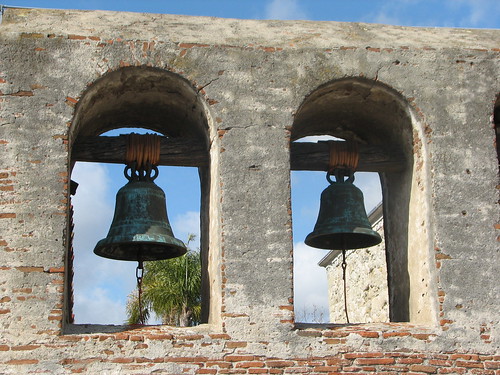
An interesting occurrence during St. Joseph’s is the “miracle of the swallows” at San Juan Capistrano, Southern California, where a whole flock of cliff swallows return from their winter vacation at Goya, Corrientes in Argentina.  They return to rebuild their mud nests months at the walls of the old stone church.  This event is celebrated each year.  The Mission Bells ring as the little birds wing their way back to the most famous Mission in California, the village of San Juan Capistrano takes on a fiesta air.

“People from all around the world come to the town of San Juan Capistrano to share in the rich tradition that defines St. Joseph’s Day at Mission San Juan Capistrano,” said Mechelle Lawrence-Adams, Executive Director of the Mission.

“We are grateful for our swallows history as a means of welcoming the public and sharing this incredible historic resource with them and invite the public to take part in all that we have to offer – dances, entertainment, bell ringing, exhibits, and the opportunity to connect with family and friends.”

The swallows remain for the duration of spring and winter, feeding on insects, spiders, flies and worms in order to breed and to prepare for their journey back to Argentina come October 23, feast day of San Juan Capistrano.

Leon Rene wrote the song “When the Swallows Come Back to Capistrano” which was recorded by The Ink Spots, Guy Lombardo, Glenn Miller and Pat Boone.

Monday, March 14, 2011

UE Art Students

I chanced to pass by Philam Life at UN Avenue and saw this exhibit by UE Art Students and took images of some using my cell phone.

Golden Years
Jazmine Mei Diaz


 Si Rubia
Jeremy Joy Francisco


Pinakamagandang Hayop Sa Balat Ng Lupa
Keziah Madrid

Tuesday, March 8, 2011

Mardi Gras

It was the Ellen Degeneres show that reminded me that the next day would be Ash Wednesday.  Ellen had those Mardi Gras beads and a lady guest from New Orleans.. And so, I downed two beers while watching the show.  

Most people associate Mardi Gras with merry making and carnivals, as in Rio, Brazil and in New Orleans.  Its roots are Christian, marking the day before Ash Wednesday when Christendom starts the practice of fasting and mortification.  Mardi Gras is leterally “Fat Tuesday” in French, also known as Shrove Tuesday or Pancake day in UK.


It is an error to refer to Philippine festivals such as the Ati-Atihan, Sinulog, Masskara, Dinagyang, Buling Buling, etc. as the local Mardi Gras.  It might be more appropriate to associate these to what was known in many Catholic cultures as Carnival, the liturgical period between Christmas and Lent. 

Mardi Gras is French for Fat Tuesday, a pagan custom which Christianity has tried to relate to the coming of Lent, a season of doing penance.  The event is also known as Shrove Tuesday, perhaps a more Christian label and associated with pancake dinners.

Tuesday, March 1, 2011

The Carabao Band of Thailand

The Carabao Band was organized in 1976 by Thai students Yuanyong Opaku (Aed) and Kirati Promsaka Na Sakon Nakhon (Khiao), both of whom were studying in the Philippines at Mapua Institute of Technology.  Their music take on social and political issues and was either banned or ignored by the government radio and TV stations during the 1980s and early '90s.  Their most popular album was released in 1984. Called Made in Thailand, it sold more than three million copies.

Tuesday, January 25, 2011

The Conversion of St. Paul

Today is the birthday of a lady who could have been appropriately named Paula, after the feast of the Conversion of St. Paul, which we also celebrate today.  

Saul of Tarsus was on the road to Damascus with marching orders to persecute Christians.  The graphic story of his falling from his horse is so well known that it does not do much to tell it again.  Conversion is just an event.  Sanctity is a lifetime activity.


He assumed the name Paul after his conversion, and spent the rest of his life as an apostle of Christ.  His first mission was with Barnabas, going on board to Cyprus, crossing the island from east to west following the southern coast.  The second mission was to Antioch, where his companion was Silas, another Roman citizen like himself.  A third mission was to Ephesus where Aquila and Priscilla were waiting.

St. Paul’s many references to the life and teachings of Christ suggests that he knew so much even if he was not present during the public life of Jesus.  Truly, the road to Damascus is much more than St. Paul  falling from his horse.